


The 86 Board: The Problem
Item: Your mental flexibility.
Status: 86’d.
We’ve reached the point in December known as “The Wall.”
The Thanksgiving adrenaline is gone, and the New Year’s finish line still feels far away.
You’re not just tired—you’re running on borrowed energy, and it’s catching up to you.
When your body relies on cortisol instead of adrenaline, your mind becomes rigid.
You get stuck. You might fixate on a server’s mistake for 20 minutes, keep replaying a bad review, or take the chaos to heart.
This is called cognitive fusion. You become attached to the stress.
The Spec Sheet: The Science
To change this, you need to understand how your mind works.
When the printer starts chirping, your brain’s alarm system—the amygdala—triggers the first wave: Adrenaline.
This is your “fight or flight” response. Your heart rate jumps, your lungs open up, and energy surges through your body. It’s instant, high-powered fuel meant for a quick dinner rush.
Adrenaline is ment to fade quickly.
But, when when the pressure keeps going, like during a 3 week holiday grind, your brain starts the second wave: the HPA Axis, which stands for Hypothalamic-Pituitary-Adrenal.
This system releases cortisol, keeping your body’s gas pedal pressed down.
The problem is what’s called a “high idle.”
Adrenaline is for sprints, but cortisol is for marathons.
When cortisol stays in your system, your engine keeps running at high speed, even when you try to sleep. This constant stress causes inflammation, locks your brain into “threat mode,” and makes your thinking rigid.
You can’t stop the chaos, but you can stop gripping it.
In the S.H.A.R.P. Mind training program, for chefs and hospitality professionals this is where module H comes in.
H stands for Hold Thoughts Lightly.
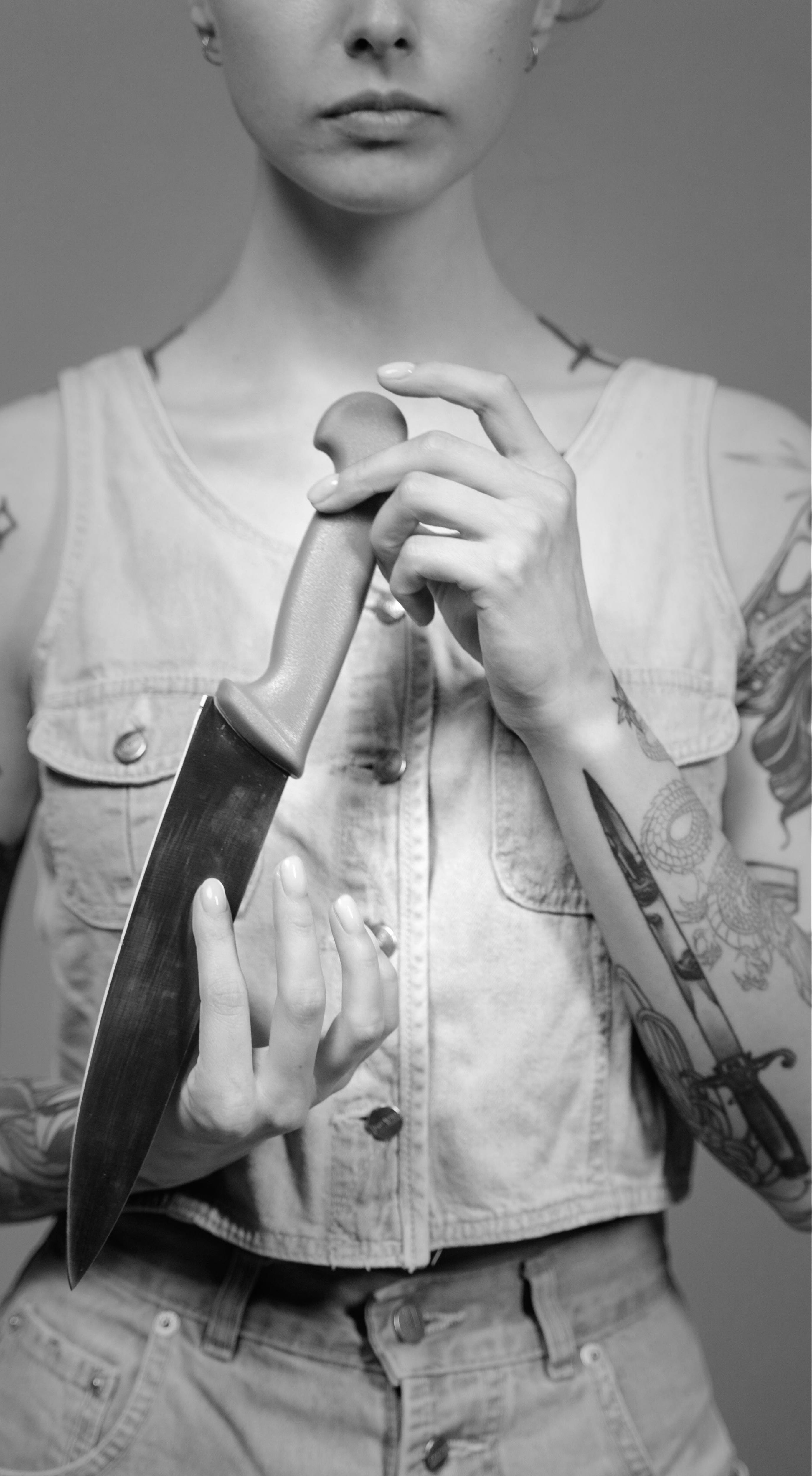
Picture a negative thought as a falling knife.
In the kitchen, we learn early:
“A falling knife has no handle.”
But when you’re pumped full of cortisol, you forget this. You try to catch the knife in mid-air. You grab onto anger or panic because you feel you have to fix it right away.
That’s how you get hurt. You’re grabbing the sharp edge of your own stress.
Holding Thoughts Lightly means stepping back and letting the knife fall.
You notice it, recognise its sharpness, but choose not to reach for it.
The Special: The Tool
Technique: “Label and Release.”
When you feel the “Cortisol Creep” tonight, that sudden urge to yell over nothing:
Catch It: Notice when your mind grabs onto a negative thought, like “This service is a disaster.”
Label It: Instead of saying “I am angry,” tell yourself, “I am having the thought that I am angry.”
Release It: Picture that thought as just a ticket on the rail. It’s just noise for now. You don’t have to deal with it right now. Leave it there and focus on the food in front of you.
This gives you a split-second gap between the trigger and your reaction.
That gap is where your professionalism (and your sanity) lives.
With you in the grind,
drA
P.S. We’re building the full Hold Thoughts Lightly training module in the lab right now.
The Founding Members Cohort will open soon.
Reference:
LeWine, H. (2011, June 15). Understanding the stress response. Harvard Health. https://www.health.harvard.edu/staying-healthy/understanding-the-stress-response
Image Credit:
Mart Production. (2021). Woman in a denim top holding a knife [Photograph]. https://www.pexels.com/photo/woman-in-denim-top-holding-a-knife-8801047/